


Synesthesia: What Color is Two?

On synesthesia, the number that named us, and why cannabis has always belonged in the same sentence as sound.
Before 22Red had a name, we went looking for one the usual way, with outside help and a lot of lists. Nothing stuck. So Shavo asked to get in the room and brainstorm it himself instead of being handed options, and about ten minutes in, he said the thing that ended the search. Somebody asked him what color two was.
For Shavo, two is red.
The color wasn’t chosen. It was already there.
That was the discovery. The rest of the room saw a number, and Shavo saw a color, the way he had since he was a kid, back when he assumed every brain worked like his. Meeting adjourned. Eight years later, you know the name.
The Number Kept Showing Up
We get asked about the 22 a lot, usually with the assumption that it’s numerology for the sake of numerology. It’s simpler and stranger than that. The number just kept turning up. Born on the 22nd. Married on the 22nd. Twenty-two when System got signed, and life changed shape. His two boys were born two years and twenty-two days apart. At some point, you stop calling that coincidence and start calling it a signature.
The Red is the part people skip past, and it’s the part that matters most. It isn’t a mood board pick. It isn’t “bold, passionate, energetic,” whatever a color-psychology blog would tell you. For Shavo, red is a property the number has, the same way it has a value and a shape. He didn’t assign it. He reported it.
Senses That Don’t Stay In Their Lanes
That reporting has a name: synesthesia. It’s worth sitting with, because it explains more about us than the logo does.
In a synesthete’s brain, senses that are supposed to stay in their lanes cross. One stimulus triggers a second, uninvited perception riding along with the first. For Shavo, numbers and letters come pre-loaded with color, a version specific enough to have its own label: grapheme-color synesthesia, one of the most common forms there is.
10 colors / 10 tones
Hear the spectrum.
Choose a color. Hear its tone. Move across the spectrum and discover which pairings feel right to you.
Ten ways to see what you hear.
An artistic exploration, not a synesthesia test or a reproduction of Shavo’s perception. These color–sound pairings are illustrative; personal associations vary.
It happens without choosing.
The association stays the same.
Two features separate the real thing from a vivid imagination. It’s involuntary, meaning he can’t switch it off. And it’s consistent, meaning you can test him now and again in ten years, and the same digit comes back the same shade. That stability is how researchers actually confirm it, and it’s the line between lifelong, genuine synesthesia and someone loosely pairing ideas. It runs in families, shows up in a few percent of people (more than you’d guess), and the current thinking treats it less as a glitch than as a different setting on hardware everyone is already running. Some scientists suspect we all start life a little cross-wired, and most of us simply prune those connections away as we grow. A few people keep them.
Inside the connection / One possible explanation
What might be happening in the brain?
One symbol. Two experiences. The idea behind cross-activation.
You recognize “2.”
The symbol activates processes involved in recognizing numbers and letters.
Activation crosses over.
In this proposed model, stronger connections allow recognition to also engage color processing.
The color comes along.
For Shavo, two is red. The association arrives automatically, without choosing it.
Cross-activation is one proposed explanation: recognizing a digit or letter may also activate color-processing regions through unusually strong connections. It offers a way to picture how a number and a color can arrive together—without a deliberate act of imagination.
A conceptual illustration, not an anatomical map. Researchers also study other explanations, including altered feedback between brain regions. Connectivity research · Research overview
There’s a second version threaded through everything Shavo makes: the kind where sound turns into something you can see. Chromesthesia, music to color. He’ll tell you he can paint you a song and mean it at face value, which is a big reason he’s directed so many of the videos. He isn’t interpreting the track. He’s transcribing a picture that already showed up.
The Company Shavo Keeps
Shavo isn’t an outlier, and he’s a long way from the first artist to build a life out of crossed senses. Synesthesia turns up all over the people who make the culture that the rest of us live inside. A short list, and it barely scratches it:
Select a portrait to read their story.

Billy Joel watches melodies show up as color while he writes, the softer ones as blues and greens, the harder consonant sounds closer to red.

Duke Ellington heard a single note as a color and a texture at the same time, and swore the same note changed shade depending on which player in the band blew it.

Pharrell Williams built a whole album around it and called it Seeing Sounds. He’s spent years making the case that it’s an asset and not a disorder, which is a sentiment we’re partial to.

Lorde says she sees a finished song as color before she can hear it, and won’t call a track done until the shades sit right.

Billie Eilish and Finneas both have it and run the family studio on it.

Geoffrey Rush has counted days and numbers in color since he was seven. Monday runs a cool blue, for the record.

Richard Feynman, the Nobel physicist, saw the letters in his equations in color, tan and violet, and dark brown, while he worked out quantum electrodynamics. So much for the idea that this is a soft, artsy thing.
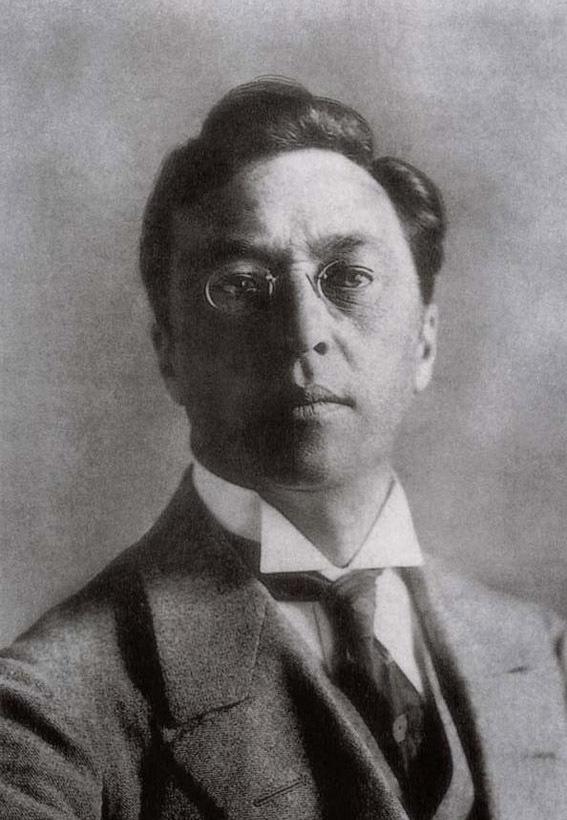
Wassily Kandinsky heard his paint and painted what he heard, and more or less talked himself into inventing abstract art, doing it.
Photo credits & licenses
- Billy Joel: David Shankbone · CC BY 3.0.
- Duke Ellington: William P. Gottlieb / Library of Congress · Public domain.
- Pharrell Williams: Will (Flickr: infomofo) · CC BY-SA 2.0.
- Lorde: Raph_PH · CC BY 4.0.
- Billie Eilish and Finneas: Premeditated · CC BY-SA 4.0.
- Geoffrey Rush: Maximilian Bühn · CC BY-SA 4.0.
- Richard Feynman: Unknown photographer / The Big T, 1959 · Public domain (U.S.).
- Wassily Kandinsky: Unknown photographer · Public domain.
Photos via Wikimedia Commons. Portraits are displayed in grayscale and some are cropped; any adapted photo retains its source license. Portraits illustrate the people discussed in this article and do not imply endorsement of 22Red.
The part that isn’t a coincidence: people with synesthesia are far more likely to end up in a creative line of work, by some estimates several times more. When your senses won’t stay in their lanes, you tend to make things that don’t either.
And there’s another door into that same country, one that a lot of you have already walked through.
The Temporary Version
Put on a record after a good joint, and something shifts. The bassline picks up a texture. A color you weren’t looking for turns up behind your eyes on the right note. The room tilts a few degrees toward the senses talking to each other.
That’s not in your head. Or rather, it’s exactly in your head, and it has a name too: drug-induced synesthesia. The temporary cousin. Where genuine synesthesia is hardwired from birth, this kind is a door that opens for a few hours and shuts again. Researchers surveying people about it keep finding cannabis in the mix alongside the usual psychedelics, most often as sound reaching over into sight. The working theory is that THC turns down the brain’s sensory filters, loosens the bouncer at the door between the senses, and lets through a little traffic that’s normally kept apart.
Anyone who’s smoked before a show already knew this without the citation. Live music and cannabis have run together as long as either has been around, and the reason isn’t only the vibe. The plant nudges a lot of us, for a few hours, toward the way Shavo is wired all the time.
Same Trick, Different Address
Here’s the connection we can’t stop turning over.
In the brain
Senses connect.
Synesthesia: one stimulus brings another perception along with it.
In the plant
Compounds interact.
The entourage hypothesis asks how compounds might shape each other’s effects.
An analogy about connection—not the same biological mechanism.
Synesthesia is senses combining in the brain. The entourage effect is compounds combining in the plant. Same idea, different address. Neither one is about a single thing doing the heavy lifting. Both are about what happens when the parts stop working alone.
Start with what’s actually in the jar. Terpenes are the aromatic compounds a cannabis plant makes in its trichomes, the frosted resin glands that also produce THC and CBD. In the wild, their job is scent: warding off pests, pulling in pollinators. They’re why one cut smells like diesel and the next like citrus peel or pine. But flavor is only the surface. The idea behind the entourage effect, a term that came out of cannabinoid research in the late nineties and got built on from there, is that terpenes and cannabinoids don’t act in isolation. They modulate each other. The whole plant does something the isolated molecules can’t, and the terpene profile is a big part of why.
Meet the low end.
Four terpene profiles. Select a card to explore its aroma and the ideas around it.
MyrceneEarthy · MuskyExplore the profile +
Earthy and musky, with the familiar scent associations of mango and hops. Often described as relaxing, but that reputation does not guarantee how a strain will feel.
LimoneneBright · CitrusExplore the profile +
Bright citrus-peel notes. Its uplifting reputation is a common association, not a guaranteed effect.
PineneSharp · GreenExplore the profile +
Sharp, green, pine-like notes. Claims about mental clarity and offsetting THC’s short-term fog remain under study.
CaryophyllenePeppery · SpicyExplore the profile +
Peppery and spicy. Beta-caryophyllene has been shown to activate the CB2 cannabinoid receptor in laboratory research. That finding does not, by itself, predict the effect of a finished strain. Read the study ↗
Aroma is not a promise of an effect. Research into terpenes and cannabinoid interactions is ongoing. Research context ↗
The lazy way to explain all this is the band metaphor: THC is the lead singer, terpenes are the backup. We’re a bassist’s brand, so we’ll fix it for you. THC is the vocal, fine, the part that a first-time listener clocks. Terpenes are the low end. The thing you feel in your chest before you can name it. Two cuts can read identically on the THC number and land in completely different rooms, one that sits you down and one that gets you moving, and the difference is the terpene profile doing what a bassline does to a song. You don’t hear the bass so much as you feel everything shift around it.
“The name is supposed to be true to the thing.”
Which is close to how Shavo picks a strain, if we’re being honest. Pheno-hunting, for us, was never a spreadsheet exercise. He’s said choosing one is like naming a kid, and it runs on the same instinct as seeing a color in a number. He smells it, he sees it, something in the cross-wiring says this one is Strangelove and that one is Angry Apple, and it holds. We’ve never taken a single plant, split it four ways, and sold it under four names to move units. That’s the opposite of the point. The name is supposed to be true to the thing.
What It All Comes Down To
So when people ask how a rock band’s bass player ended up running a cannabis and lifestyle brand, the honest answer is that it was never a pivot. It was the same wiring, finding new places to land. Music that arrives as a picture. A number that shows up in color. A plant that smudges the line between what you hear and what you taste. Different inputs, one instinct, and the instinct is old: the senses were never built to sit in separate rooms.
We just made a place where they don’t have to.
